
Living wills and last wills (testaments) are essential legal documents that serve distinct yet vital roles in personal planning. A living will outlines your medical preferences in situations where you can no longer communicate those wishes. Conversely, a last will details how your assets should be distributed after your death. It’s important to recognize that the terminology and legal requirements surrounding these documents can vary significantly by state; thus, understanding the specific laws that apply to your area is crucial. By familiarizing yourself with these distinctions, you can effectively prepare for future decisions regarding your health and estate, ensuring that your wishes are respected and your loved ones are taken care of.
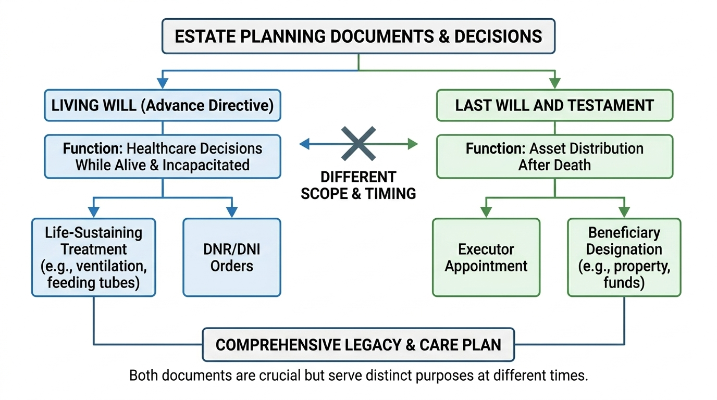
Key Differences Between a Living Will and a Last Will
In straightforward terms, a living will is a document that specifies your medical treatment preferences during times of incapacitation, such as when facing a serious illness. It outlines the types of treatments you wish to receive or refuse. In contrast, a last will is created to manage the distribution of your property and assets following your death. It provides instructions on how your belongings should be divided and identifies who will inherit them. Essentially, a living will is focused on healthcare decisions that occur during your life, while a last will addresses the management of your estate after your passing. Recognizing these differences empowers you to make informed decisions pertinent to both scenarios.
What Is a Living Will? Definition, Purpose, and Importance
A living will is a legally binding document that delineates an individual’s health care preferences in situations where they are unable to communicate their wishes due to incapacitation. This advance healthcare directive is pivotal as it guides both medical professionals and family members in making crucial decisions about life-sustaining treatments, pain management, and other vital care measures, particularly when confronted with terminal illness or severe injury.
This document becomes active in specific medical scenarios, such as a coma or debilitating illness, where communication is not possible. For example, if an individual experiences a debilitating stroke and cannot convey their decisions, their living will may stipulate whether they wish to undergo resuscitation or be placed on life support.
Imagine a situation where an individual diagnosed with terminal cancer crafts a living will that expresses their desire not to receive extraordinary measures should their condition deteriorate. This degree of clarity not only alleviates the decision-making burden from family members but also ensures that the person’s values are honored even in their absence.
Thus, a living will plays a crucial role in healthcare management, aligning medical interventions with individual values and preferences.
What Is a Last Will? Definition, Purpose, and Key Functions
A last will is a legal document that stipulates how an individual’s assets will be allocated following their death. This document performs several key functions, such as appointing an executor to oversee the estate, delineating property distribution, and naming guardians for minor children. By specifying these preferences explicitly, a last will helps to minimize confusion and potential disputes among heirs.
A last will covers various asset types, including real estate, personal belongings, and financial accounts. However, it’s essential to note that some assets may bypass probate—the legal process of settling an estate. For instance, jointly owned properties typically transfer directly to the surviving owner upon death, thus circumventing the will entirely. Similarly, benefits from life insurance policies and retirement accounts generally have pre-designated beneficiaries, enabling those funds to be disbursed without the need for court intervention. Therefore, while a last will constitutes a vital aspect of estate planning, understanding the greater framework of asset distribution outside the confines of probate is equally necessary.
Estate Planning Documents Commonly Confused With Living Wills and Last Wills
It’s crucial to differentiate between various legal documents pertinent to healthcare and estate planning. A living will outlines an individual’s healthcare wishes if incapacitated, while a health care proxy designates someone to make medical decisions on their behalf during such times.
A living trust, by contrast, is meant to manage assets during one’s lifetime and distribute them posthumously, avoiding the probate process altogether. Similarly, a DNR (Do Not Resuscitate) order explicitly instructs medical personnel not to perform resuscitation during a cardiac event, ensuring that one's preferences regarding extreme measures are respected.
Lastly, the POLST (Physician Orders for Life-Sustaining Treatment) form represents a medical order that captures a patient’s treatment preferences tailored to serious medical conditions, commonly used alongside a health care proxy. Grasping these differences is essential for making informed legal decisions.
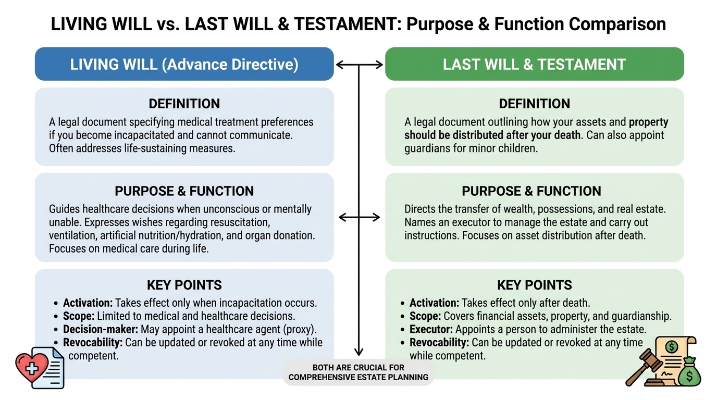
When You May Need a Living Will or Last Will
Both a living will and a last will are vital in estate planning for various personal situations. For those confronting terminal illnesses, a living will is essential for specifying healthcare preferences when they can no longer express themselves. Conversely, parents of minor children should prioritize a last will to make guardianship arrangements and dictate asset allocation according to their wishes after their passing.
In cases of changing family structures, such as amid divorce or remarriage, these documents clarify responsibilities and protect the interests of all involved. Moreover, individuals with substantial assets or specific inheritances need a last will to ensure their desires are clearly articulated. Recognizing these potential scenarios emphasizes the importance of both legal documents as critical tools for maintaining control over personal and financial matters throughout various stages of life.
Managing the Creation, Signing, and Revocation of Wills
When establishing a living will or a last will, understanding the key steps ensures that your wishes are honored and legally recognized. Here is a straightforward process to follow:
- Creation: Start drafting the document. For a living will, clearly define your health care preferences in case of incapacitation. For a last will, outline how you want your assets allocated after death. Templates can be useful, but ensure compliance with local laws.
- Signing: After drafting your documents, sign them in the presence of witnesses as legally required (usually two, who should not be beneficiaries). This step is critical for its validity and to lessen future disputes.
- Sharing: Distribute copies of your wills to trusted family members, your attorney, and healthcare providers. Transparent communication about your preferences helps prevent confusion and ensures compliance with your directives.
- Updating: Regularly review and update your wills, especially after significant life events such as marriage, divorce, or childbirth. Keeping documents current is essential to reflect your up-to-date intentions.
- Revocation: If revoking a will is necessary, ensure that your intentions are clear and draft a new document as required. Disposing of old copies is important to avoid legal confusion.
Every step in the management of a living will and a last will is pivotal, providing legal protection for your wishes while offering peace of mind for you and your loved ones.
When to Consult Legal and Medical Professionals About Wills
Dealing with the intricacies of living wills and last wills can be daunting, making it essential to recognize when to seek professional advice. Engaging with legal or medical experts is advisable in several scenarios:
- Chronic Illness Diagnosis: Consulting legal help upon diagnosis of a serious health condition can clarify how to document your wishes properly.
- End-of-Life Decisions: When contemplating end-of-life care preferences, medical professionals can assist in understanding the ramifications of your choices.
- Estate Planning: Legal guidance is crucial for creating a last will, particularly regarding inheritance laws and asset distribution strategies.
- Family Disputes: If there's potential conflict over your wishes, legal counsel can help navigate complex family relations.
- Changes in Healthcare Preferences: If your healthcare preferences change, a legal expert can assist in updating your living will accordingly.
Consulting qualified professionals in these situations guarantees that your wishes are faithfully represented and legally sound.
State-Specific Requirements for Living Wills and Last Wills
Living wills and last wills are legal documents that must be prepared and executed according to applicable state laws. Although the general purpose of these documents is similar across the United States, specific requirements can vary, including signing procedures, witness requirements, notarization rules, and document validity standards.
Understanding state-specific requirements can help ensure that your documents accurately reflect your wishes and are more likely to be recognized when needed. For example, a will that meets the requirements in one state may not automatically satisfy the rules of another state after a move or major life change.
Before creating or updating a living will or last will, individuals should review the requirements in their state and consider consulting qualified legal professionals when their situation involves complex assets, family circumstances, or healthcare decisions. Keeping documents updated and compliant can provide clearer guidance for loved ones and reduce potential complications in the future.